Tuesday, October 30, 2018

Module 10.8 Asbestosis

Asbestosis (White Lung) is a lung disease resulting from the inhalation of asbestos fibers in the air. Asbestos is commonly used as insulation material for buildings. Therefore, occupations most associated with insulation, like contractors, are most at risk. Inhaled asbestos fibers and dust can get trapped in the lung which leads to damage and scarring within the lungs. The World Federation of Public Health Associations, the International Commission on Occupational Health, and the International Trade Union Confederation wanted a global ban on mining and use of asbestos products. They cite that more than 40 industrialized countries have banned asbestos and the most efficient way to eliminate asbestos-related diseases is through the elimination of the product from the market. In the United States, asbestos-containing products that are banned under the Toxic Substances Control Act are: corrugated paper, rollboard, commercial paper, specialty paper, and flooring felt. Banned Asbestos-containing uses are asbestos pipe insulation and asbestos block insulation on faulty components, such as boilers and hot water tanks; and spray-applied surfacing asbestos-containing materials. Unfortunately, there are still many asbestos-containing products that are not banned. Below is a list of said products:


Fortunately, in 2018, the EPA proposed a significant new use rule, that would prohibit these uses and products. The EPA is to ensure that the manufacture, import, or processing for the currently unregulated new uses of abestos identified in the rule are prohibited unless reviewed and approved by the EPA. It is great to hear that the use of Asbestos is currently being evaluated for today's use.

Module 10.5 National Institute for Occupational Safety and Health

National Insitute for Occupational Safety and Health (NIOSH) is a research agency focused on the study of worker safety and health, and empowering employers and workers to create safe and healthy workplaces. This organization is a part of the U.S. Center for Disease Control and Prevention (CDC). It's vision is to have "Safer, Healthier Workers" and it's mission is to "develop new knowledge in the field of occupational safety and health and to transfer that knowledge into practice.
Specifically, I am blogging on the NIOSH program, Health Hazards Evaluations (HHEs). This program is to help employers and employees recognize and control health hazards in their workplace. The goals of this program is to provide authoritative assistance in evaluating new and recurring workplace health hazards and to raise awareness of recurring workplace health hazards and preventive measures based on health hazard evaluation findings. One great aspect of this program is that it offers occupational medicine residents an opportunity to engage in public health practice through a rotation program. This program allows Occupational medicine residents to have experience in various phases of worksite evaluations.

Module 10.2 MSDS and TOXNET of Hydrochloric Acid

In my old job as a Laboratory analyst , I was consistently in contact with Hydrochloric Acid. We used HCl for tests as well as acid washes of the shared glassware used around the laboratory.
Below is a Material Safety Data Sheet for Hydrochloric Acid (HCl)

http://www.sciencelab.com/msds.php?msdsId=9924285

The major health risks with HCl acid is that it is very hazardous in case of skin contact, eye contact, and ingestion. Particularly for skin contact, it is a corrosive, irritant, and permeator. It is slightly hazardous in case of inhalation. HCl is a classified 3 carcinogen (not classifiable for humans). It's mutagenic and teratogenic effects are also not available in the MSDS. Some PPE or special precautions that need to be taken are to wear goggles and gloves to reduce skin contact. When handling HCl, it is important to work behind a laboratory splash shield for prevention. When I was handling this chemical, I received training/education on the handling of acids and bases, as well as the risks. The training video strongly emphasized the dangers of skin contact with HCl. There were no discrepancies when comparing the MSDS to the ToxNet database.


The MSDS was an adequate tool for a worker to use to gain an understanding of the potential health risks and protection associated with HCl. The MSDS clearly and explicitly states the First Aid Measures. One thing I will critique is that the mutagenic effects, teratogenic effects, and developmental toxicity are unavailable.

Module 10.1 Occupational Health and Safety

It is important to bring the importance of occupational health and safety to light from a public health perspective. The most surprising statistic from the lecture video is that every 15 seconds a worker dies from a worker-related injury or illness, or 2.3 million people per year. The most common physical hazards are tripping, slipping, falling; ergonomic problems; heat and cold; fires and explosions; abrasions, cuts, punctures, and lacerations; amputations and motor vehicle accidents. As well, as these physical hazards, there are also chemical, biological, and radiological workplace exposures varying on the location of work. These exposures can be pathogenic exposures for healthcare facility workers and laboratory scientists to radiation in nuclear power plant workers or mineworkers. One of the most famous work-related illnesses is black lung disease, which results to the over exposure of coal dust.
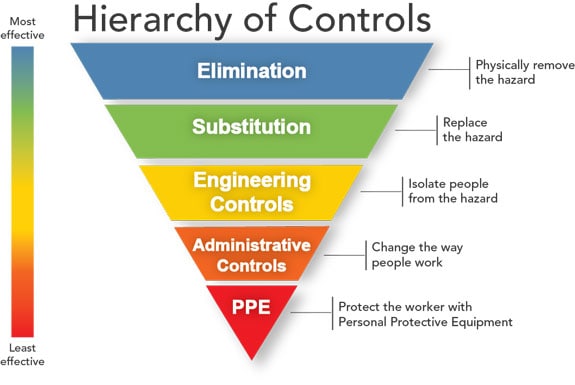
A very resourceful takeaway from the lecture video is the "Hierarchy of Controls" as seen below:

 Image result for hierarchy of controls

This diagram is straight-forward and explicitly states the most effective way to limit health hazards to workers.

Three exposure terminologies those in occupational health and safety need to familiarize themselves with are:

  • permissible exposure limit - the legal limit set by OSHA for a chemical exposure or noise level
  • Time-weighted average - average exposure over the course of a normal 8-hour day
  • Threshold limit value - the amount of an exposure that a worker can be exposed to day after day without harm
OSHA is the Occupational Safety and Health Administration was created to assure safe and healthful working conditions for working men and women by setting and enforcing standards and by providing training, outreach, education, and assistance.

The most striking example of OSHA standards given in the video is the bloodborne pathogens example.

A bloodborne pathogen is a microorganism that causes disease and is present in human blood. The most common diseases are Hepatitis B and HIV. In all cases of bloodborne pathogens, OSHA creates a standard by first determining risk for exposure, implements an exposure reduction plan (that involves universal precautions, engineering controls, and PPE), and training/education

Tuesday, October 23, 2018

Module 9.4 Heavy Metals

Lead Poisoning by Herbert Needleman
Lead poisoning is a serious issue that the United States has taken many precautions in through policy and regulations. Needleman (2004) highlights the background of Lead and its toxic effects. The early history of lead colic was interesting for me. From the use of it's "sweet flavor" in wines sounds very dangerous in retrospect. This study primarily focuses on lead poisoning and toxicity in children, infant, and prenatal individuals. The toxicology of lead is due to its metallic properties such as being a divalent cation. This characteristic allows Lead to bind strongly to sulfhydryl proteins that are most prominent in the central nervous system. As a result, early lead exposure in children, infants, and prenatal individuals may cause symptoms such as encephalopathy, stupor, and convulsions. Needleman also points out that elevated lead levels were associated with reading disabilities, school failure, fine motor functions and lower class standings in high school.
Prevention was an intense focus in the 1970s. This lead to the EPA taking a hard stance on the removal from lead in gasoline, houses, and paint. This method has been extremely effective in it health as well as the economy. Needleman quoted in the study that the "benefit range for the 1998 cohort [due IQ-related increase in income and the estimated economic benefit] was between $110 billion and $319 billion.


An environmental health response to a severe outbreak of childhood lead poisoning in Nigeria
The environmental health response to the outbreak of lead poisoning in Nigeria is tragic to read about. Greater than 400 deaths in children less than 5 years old can be attributed to severe soil contamination from artisanal gold ore processing in residential areas. This health crisis was tragic and took a global effort to mediate. International agencies involved were the Joint United Nations Environment Program/Coordination of Humanitarian Affairs Environment Unit and non-government organizations. The environmental and health response was to remove contaminated materials and to assist the local government to employ villagers to remediate homes with available equipment and materials. Children were also given chelation treatment.

Module 9.3 Green Chemistry

Green chemistry is an important facet of environmental health that involves the process of reducing or eliminating the use of hazardous substances from a chemistry point of view or lens. I have not heard of many examples of green chemistry, but after doing some research I have found many inspiring examples of applied green chemistry. One example that I found extremely interesting is the pharmaceutical company Marck developing a less toxic treatment for type 2 diabetes that uses green synthesis in the production of Sitaglipin. This green process reduces waste, improves yield and safety through the elimination of a specific metal catalyst. My thoughts on the Green Chemistry 12 principles are that they are incredibly environmentally conscious and thoughtful for health and environmental safety. I think it these principles are idealistic and needs to be encouraged in all pharmaceutical and biochemistry industries.

Module 9.2 The Six Classes

The Six Classes approach is a program of the Green Science Policy Institute that "focuses on reducing the entire of chemicals of concern, rather than phasing out problematic chemicals one at a time."

In this blog, I will comment and address the Six Classes of chemicals that the Green Science Policy Institute state that is of high concern. These classes are:
Highly Fluorinated Chemicals
Antimicrobials
Flame Retardants
Bisphenols and Phthalates
Some Solvents
Certain Metals


Highly Fluorinated Chemicals
These chemicals are commonly used for their non-stick and waterproof qualities due to their hydrophobicity. A surprising 98% of Americans have traces of fluorinated compounds in their systems. These chemicals are used in carpets, cleaners, clothing,  cookware, cosmetics, food packaging, furnishings, outdoor apparel, paints, papers, protective coatings and sealants, and firefighting foams. The most common chemical is C8 or PFOA, and is linked to kidney and testicular cancer, elevated cholesterol, decreased fertility, and thyroid problems and decreased immune response to vaccines in children. Fluorinated chemicals also do not break down naturally in the environment. They are difficult to degrade and rid of.
With the advice from the Green Science Policy Institute, we can phase out highly fluorinated chemicals by staying away from textiles and carpeting, purchase cast iron, glass, or ceramic cookware rather than Teflon and avoid personal care products with "perfluor-" "polyfuor-", and "PTFE" on the label.


Antimicrobials 
As I've discussed in previous blogs, antimicrobials are added to products to kill or inhibit the growth of microbes. These are often unnecessary and kill microbes that are beneficial to the human systems. They are found in numerous of objects such as cleaning/personal care products, clothing and linens, and building materials an furnishings. One of the most famous antimicrobials is Triclosan. Triclosan is a toxic chemical associated with hormone disruption. Because of their high-volume use, antimicrobials is causing widespread contamination in the environment and wildlife. The FDA and other studies show that there is no perceived health benefit of antimicrobials in consumer products.
With the advice from the Green Science Policy Institute, we can phase out antimicrobials by avoiding products that are advertised as "antimicrobial", "antibacterial", or "anti-odor"


Flame Retardants
Flame retardants are organohalogen and organophosphate chemicals, such as polybrominated diphenyl ethers (PBDEs) and chlorinated tris (TDCPP). These chemicals are found in furniture, building materials, wire and cables, electronics in order to slow ignition and prevent fires. Some flame retardants can enter our system through inhalation and is associated with lowered IQ and hyperactivity in children as well as cancer and hormone disruption in adults. Some environmental concerns with flame retardants are that they are unnatural pollutants that can bioaccumulate up our food chains. To phase out flame retardants, we must invest in preventing ignitions with other fire-safe products, look for the label "TB117-2013" that indicates the item does not use flame retardants and avoid polyurethane foam in carpets.


Bisphenols and Phthalates
Bisphenols and phthalates that are commonly found in the process that makes plastics stronger and/or more flexible. Bisphenols are present in polycarbonate plastic products (water bottles, food storage containers and packaging) and Phthalates are found in polyvinyl chlorides (PVC) products such as toys, plastic wrap, adhesive, and food packaging. These products are hormone inhibitors and disrupt hormone and other body systems. The health concerns with bisphenols and phthalates are asthma, neurodevelopmental problem, and behavioral development problems. We are exposed to these toxic chemicals through indigestion and contact with food, water, and dust. We are also susceptible to skin absorption as well. There has been a worldwide overabundance of plastic products in our environment. It is an incredible issue that is disrupting our ecosystem in all aspects.
In order to phase out bisphenols and phthalates, we must phase out the use of certain plastics. Plastics should be labeld with "BPA-free" and avoid plastic products marked with recycle codes 3 or 7.


Some Solvents
The major solvents of concerns are aromatic hydrocarbon solvents and halogenated organic solvents. These solvents are found in oil-based paints, paint strippers, adhesives, cosmetics, markers, aerosols, nail polish remover, and household cleaners. Some major health concerns can be temporary such as dizziness and headaches, while some long -term exposure is associated with cancer risk. We are often exposed through inhalation or skin contact. People who work with gasoline and paints are at greatest risk of exposure. Major environmental concerns are the spills or releases to air, soil and water. Chlorinated solvents are slow to break down in the soil and thus contaminating our ecosystems.
Some ways we can phase out these materials are used to water-based paints, opt for OUT of dry cleaning, and use eco-labeled cleaning products.


Certain Metals
Metals that are dangerous for our health are mercury, arsenic, cadmium, and lead. Mecury is found from coal-burning plants and can be taken up by and concentrated in fish in the ecosystem. Arsenic can be found in foods, like rice, that are from contaminated waters and soils. Cadmium is found in cigarette smoke, metal costume jewelry and rechargable batteries. Lead exposure can be caused from paints and homes build before 1978.  These metals can cause a variety of health concerns such as brain development, behavioral problems, and cancer risk. The largest environmental concerns are that these metals cannot be broken down and accumulate in our ecosystems.

Tuesday, October 16, 2018

Module 8.5 Ideal Chemical Policy

For me, an IDEAL chemical policy must encompass a lot of factors that are similarly addressed in the Louisville Charter. An ideal chemical policy must first be preventative and must not be reactionary. It is imperative to be able to scientifically predict and be proactive in finding chemical hazards. As I mentioned in other blogs, transparency is another key issue that I believe is integral. With regards to being proactive, it is important to acknowledge highly toxic chemicals and set into policy stricter evaluations and regulations for suppliers. Transparency gives the consumer trust in their purchases as well as confidence in the knowledge of what they are buying. Transparency is also important when organizations have broken previous chemical policies. Often, these huge for-profit organizations have the adequate capital to sweep violations out of the public eye. It is important to hold organizations accountable for the environmentally hazardous products they may sell.

Module 8.4 Chemical Policy Reform

Give the Public and Workers the Full Right-to-Know and Participate

The Louisville Charter discusses the importance of involving the public and workers in decisions on chemicals. For me, the most important of this highlight of the Louisville Charter is the disclosure of chemicals and harmful materials to the public.

The Louisville Charter allows references a paper by Paul Orum (2005) titled "Give the Public and Workers the Full Right-to-Know and Participate. Orum discusses the importance of immediate disclosure of environmental health hazards. Orum (2005) defines the, "Right to Know" as the "routine, systematic, mandatory, public reporting of toxic chemicals or other environmental hazards, rather than access to government documents through the Freedom of Information Act." The underlying importance behind the "Right-to-Know" is an increase in transparency. It is important for the public to engage in meaningful discussion with anyone whom they may choose. Most importantly this information has to be easily accessible to the public. Websites that we have been using like, toxnet or what's on my food?, are integral in bridging this information gap between consumers and suppliers.

Module 8.3 What's on my food?

Tonight, I had a Filipino dish called Pork Adobo. Essentially, it is a pork stew that is marinated with vinegar, soy sauce, and garlic. It's seasoning includes bay leaves and peppercorn as well. This dish is usually served with a plate of white rice.

I used the http://www.whatsonmyfood.org/banner.jsp to figure out what pesticide residues may be found in my food. Specifically, I will be analyzing the pesticide residues in pork and rice.

The website www.whatsonmyfood.org found 3 pesticide residues found by the USDA Pesticide Data Program. Thes pesticides are carbaryl, piperonyl butoxide, and 1-naphthol. Fortunately, these pesticides are found in less than three percent of pork samples. The Human Health effects of these pesticide residues are known or probable carcinogens, suspected hormone disruptors, neurotoxicity, and developmental or reproductive toxicity. There are associated environmental effects are that some of these pesticides are honeybee toxins

For rice, there are 15 pesticide residues found by the USDA Pesticide Data Program. These pesticides are piperonyl butoxide, MGK-264, Malathion, Permethrin Total, Propiconazole, DDDp, Allethrin, resmethrin, carbendazim, endosulfan sulfate, carbaryl, fludioxonil, endosulfan II, imidacloprid, and propanil. The known human health effects of these pesticides are that these pesticides are known or probable carcinogens, suspected hormone disruptors, neurotoxins, and developmental or reproductive toxins. Also, 6 of these pesticides are honeybee toxins.

Fortunately, none of these pesticide residues is abundant in the food I listed. The most prevalent pesticide residue is piperonyl butoxide and it is found in 16.2% of rice samples. However, I am still wary and anxious about possible pesticides in my produce and food. This reflection has encouraged me to be wary and find sustainable and healthy alternatives to shopping like a farmers market or such. In terms of public health, it should be imperative for food organizations to be transparent with what pesticides they are using in their products. 

Tuesday, October 9, 2018

Module 7.8 Topic of Interest - Global Warming

In particular, my topic of interest for my literature review is with regards to climate change. Global warming and climate change will take a worldwide effort to mediate the apparent danger to the world. In this blog, I am discussing relevant agencies (international, national, and state) implicated in addressing this topic. I believe this to be one of the most pressing environmental issues and most immediate issue we must address.

On an international level, one of the major players in addressing climate change is the United Nations Framework Convention on Climate Change (UNFCCC). This secretariat is tasked with developing the plan and framework to address climate change. Most recently, the Paris Agreement in 2015 was the most landmark agreement to combat climate change.

In the United States, there are many federal entities responsible in this fight against climate change. The United States Global Change Research Program was established in 1989 to assist the nation in understanding, assessing, predicting, and responding to human-induced global change. The thirteen agencies involved with this program are the Department of Agriculture, Department of Commerce, Department of Defense, Department of Energy, Department of Health & Human Services, Department of the Interior, Department of State, Department of Transportation, Environmental Protection Agency, National Aeronautics & Space Administration, National Science Foundation, Smithsonian Institution, and U.S. Agency for International Development.

Reference:
https://unfccc.int/
https://www.globalchange.gov/agencies

Module 7.7 Agency of Toxic Substances and Disease Registry

Image result for atsdr


For this module, I am analyzing the Agency for Toxic Substances and Disease Registry (ATSDR). The ATSDR is based in Atlanta, Georgia and is an agency of the U.S. Department of Health and Human Services.  The role of the ATSDR includes public health assessments of waste sites, health consultations concerning specific hazardous substances, health surveillance, and registries, response to emergency releases of hazardous materials, applied research in support of public health assessments, information development and dissemination, and education and training concerning hazardous substances.
The ATSDR is directed by a congressional mandate. Originally, Congress created this agency to implement the health-related sections of laws that protect the public from hazardous wastes and environmental spills. Particular tasks directed under the ATSDR include removal and clean-up of Superfund sites. Now the agency oversees and is responsible for the functions listed in the first paragraph. Key guides and policies available to the public are the "Cancer Policy Framework", "Environmental Data Needed for Public Health Assessments", "Guidance Manual for ATSDR Public Health Assessments", and "Toxicological Profile Information."
The public health importance of the ATSDR is integral in ensuring the health of the nation against hazardous substances in the environment. They have had congressional testimony on recent activities such as hydraulic fracking, and health issues associated with contaminated drywall.

Reference:
https://www.atsdr.cdc.gov/

Module 7.4 Local Environmental Services


The Placer County Health and Human Services website is easily accessible and user-friendly. One can use this well-organized site to quickly find what services are available to the public. The services available to the community are organized in the following categories: Adult Services, Community Resources, Animal Services, Child and Youth, Human Services, Public Health, Environmental Health, Tahoe Services, and Behavioral Health Managed Care. The website also lists the department leadership to increase transparency of the Placer County Local government.


After browsing the website, I learned about the many services that Placer County provides. The site is extremely comprehensive, and I cannot think of any services that a public health system should ensure that is not already listed. One particular resource that I found extremely interesting that is not an environmental issue is a resource for "Senior Peer Counseling."

With regards to Environmental Health Services, Placer County lists common services such as food safety, the California Environmental Reporting System, and Community events. In particular, a service that I found interesting is the "Building a New Home" resource. Placer County has seen an increase in the number of homes being built, I can see this resource being extensively used by the public. It lists the "County Building Services Division" and "County Planning Services Division" to assist home builders. It also includes Drinking Water suppliers as well as the Environmental Engineering and Utilities for disposal of wastewater and sewage.


Reference: https://www.placer.ca.gov/departments/hhs

Tuesday, October 2, 2018

Module 6.7 Obesogens

"Obesogen" refers to the genetic factors and compounds that may result in a predisposition to obesity in individuals. To combat obesity, it is essential to develop a healthy eating plan and exercise regularly. 

Placergrown.org is a wonderful resource for farmers markets in Placer County. Here is a list of items that are "in season": 
Arugula, Beets, Blueberries, Broccoli, Brussels Sprouts, Cabbage, Carrots, Cherries, Collard Greens, Cucumbers, Eggs, Garlic, Herbs, Honey, Kale, Kohlrabi, Leeks, Lemons, Lettuce, Mizuna, Onions, Pea Shoots, Potatoes, Spinach, Sprouts, Strawberries, Sugar Snap Peas, Summer Squash, Sunflower Shoots, Swiss Chard, Turnips, Watercress, Wheatgrass, Zucchini Squash 

Other beneficial resources are:
www.sustainabletable.org/shop/eatseasonal 
www.foodroutes.org/localfood
www.localharvest.org

Below is a harvest calendar for northern California: 
]


It is a public health imperative to encourage healthy eating and lifestyles as well as supporting our local community to serve sustainably grown food. It would be imperative to motivate hospitals to invest and purchase seasonal and locally grown foods to the populations it serves. It doesn't make sense and seems hypocritic as health professionals to nourish the sick community with unhealthy food. The first article titled, "Seasonal Foods: A New Menu for Public Health" encompasses ways we can encourage healthcare facilities to serve local and season foods to promote healthy eating choices.

"Obesogen" refers to the "dietary, pharmaceutical, and industrial compounds that may alter metabolic processes and predispose some people to gain weight" (Holtcamp 2012). To combat obesity, it is crucial to develop a healthy eating plan and exercise regularly.  I have heard of Obesogens in my undergraduate genetics class. I distinctly remember my professor using Obesogens as an example for epigenetics, the study of how the environment affects an individual's genes. Obesogens are important factors to consider when discussing policy or system changes in an environment. Holtcamp (2012) discusses the importance of Obesogens and its environmental link to Obesity. This article was insightful in providing research studies to support exposure to obesogen can have on biological processes. 

I chose to do some light research on the Obesogen, monosodium glutamate (MSG) that is present in many of our foods. I know of Monosodium Glutamate as the chemical comparison to the term "Umami." Umami is the term to describe the sensation as "savory." MSG is added to foods to create this "artificial" flavor of salty and savoring. 
Below is the Toxicity Summary of MSG by toxnet.nlm:

In my research, some studies found that the rate of weight gain in experimental animals was greater in MSG present animals compared to controls (Yu; Zhao; Shi; Ma; Yu; 1997). However, a different study suggested that long-term ingestion of MSG did not induce obesity or insulin resistance in a two-generation study of mice (Nakamura; Kawamata; Kuwahara; Smriga; Sakai; 2013). More research will be needed and administered to discuss the effects on MSG on the human population. 


Module 6.6 Use of Antibiotics

One analogy I like using to describe the use of antibiotics and disease is that of an "arms race." This race is between Humans and Disease in which one is trying to outcompete the other. Through natural processes, diseases and infections are programmed to survive and result in sickness within our bodies. As a response, scientists develop antibiotics and countermeasures to these diseases. The diseases then evolve and develop immunities to certain countermeasures, and the cycle continues.

The articles by Dallas (2012) and the Food and Water Watch (2015) outline the importance of antibiotics in the food we eat. Dallas (2012) outlines that populations may be at risk of methicillin-resistant Staphylococcus aureus (MRSA) due to the presence of livestock. This superbug is caused by the overuse of antibiotics in livestock and as a result, may be present in the food we eat. It is not difficult to find antibiotic resistant bacteria in livestock in Industrial farms due to the sheer quantity of livestock and product produced. "The FDA reported in 2011 that 80 percent of antibiotics in the United States are sold for agricultural purposes" The dangerous and real aspect of antibiotic resist bacteria is that it can spread from animals-to-humans via food, farms or contact with contaminated waste.

The articles by Dunn (2011) and Schettler (2016) discuss this antibiotic/disease arms race in the other settings. The article by Dunn (2011) discuss that antibiotic, antimicrobial, wipes and soaps are "no more likely than good old-fashioned soap to prevent gastrointestinal or respiratory illness." The use of triclosan, the common antibiotic compound, has shown no effect on the bacteria cells and may actually increase the presence of triclosan-resistant bacteria. The report by the Schettler (2016) discuss the presence of specific antimicrobial furnishings in a hospital setting. Hospitals are investing in furnishings that have antimicrobial properties and reduce the risk of healthcare-associated infections. Schettler discusses that these furnishings have rarely been evaluated in clinical studies for their effectiveness in reducing healthcare-associated infections. He recommends further research and inquiries into the growing use of products containing such antimicrobials at the risk of developing resistant strains and the true efficacy of such products in preventing infections.

Reference:
Dallas, M. (2012). Nearby Livestock May Raise 'Superbug' Risk. MedicineNet.com. Retrieved from: https://www.medicinenet.com/script/main/art.asp?articlekey=163935

Dunn, R. (2011). Scientist Discover that Antimicrobial Wipes and Soaps May Be Making You (and Society) Sick. Scientific American. Retrieved from: https://blogs.scientificamerican.com/guest-blog/scientists-discover-that-antimicrobial-wipes-and-soaps-may-be-making-you-and-society-sick/

Food and Water Watch. (2015) Antibiotic Resistance 101. Food and Water Watch. Retrieved from: https://www.foodandwaterwatch.org/insight/antibiotic-resistance-101

Schettler, T. (2016). Antimicrobials in Hospital Furnishings: Do They Help Reduce Healthcare-ASsociated Infections?. Health Care Without Harm. Retrieved from: https://noharm-uscanada.org/sites/default/files/documents-files/3854/Antimicrobials%20Report%202016_1.pdf

Module 6.4 Industrial Farming - Save The Bees

The dramatic and foreboding extinction of bees has been an important environmental issue discussed in the past years. The article by "S.C" in the Teatro Naturale encompasses the global impact and destruction due to the extinction of bees. It is common knowledge that pollination due to bees is important to the food we eat. As stated in the article, "Pollinators play a key role in roughly 35% of global food production and are directly responsible for up to 40% of the world's supply of micronutrients such as vitamin A and folate..." The correlation between bees and vitamin A is new knowledge to me. The article explicitly states the alarming statistic that the extinction of bees will lead to "1.42 million additional deaths" due to vitamin A and folate deficiencies. While we acknowledge this problem, it is important to take additional steps to "save the bees." To save the bees, we must be cautious of the pesticides, fungicides or herbicides we use on our plants. Also, I advocate the purchase of local honey. Local honey supports your local beekeeper and, in my opinion, tastes so much better. 
Image result for save the bees

The documentary "Dirt! The Movie" advocates the importance and necessity of dirt. I personally like how in this documentary, how individuals anthropomorphize "Dirt" as the "Skin of the earth." This dramatization is critical in getting common people to continue and increase the care of dirt. Dirt is important for food and agriculture. It is integral for our community to take care of the topsoil and "dirt" in order to create a healthy and sustainable biosphere. One thing, I strongly agree of that was mentioned in the movie is the theme of increasing knowledge in our youth through "greening" urban areas. This includes smart planting, encouraging the creation of parks, and teaching our youth the importance of "dirt" in our communities.


Industrial Farms or factory farms are large operations that prioritize profit and efficiency at the expense of the environment. The informative documentary, Food Inc, enlightened me on the malpractice of animals in large-scale plants. This specific documentary was accompanied by disgusting footage of what takes place within the plants. This section of the module shows the negative effects of when business and profit intersect with our environment. As of 2012, there are only Dairy related factory farms located in Placer County CA. I was not aware that this factory farm existed. Most importantly, the facts related to California, in particular, were surprising and caught my attention. 


I do not compost. I used to have a colleague who would compost in addition to having her own vegetable garden. Composting is essential to keep our soil healthy because it is literally the most natural process of breaking up organic matter. Composting is the circle of life. The decomposition of natural waste is carried out by natural microorganisms, insects, fungi, etc. to return nutrients back into the soil to make for healthier dirt.